
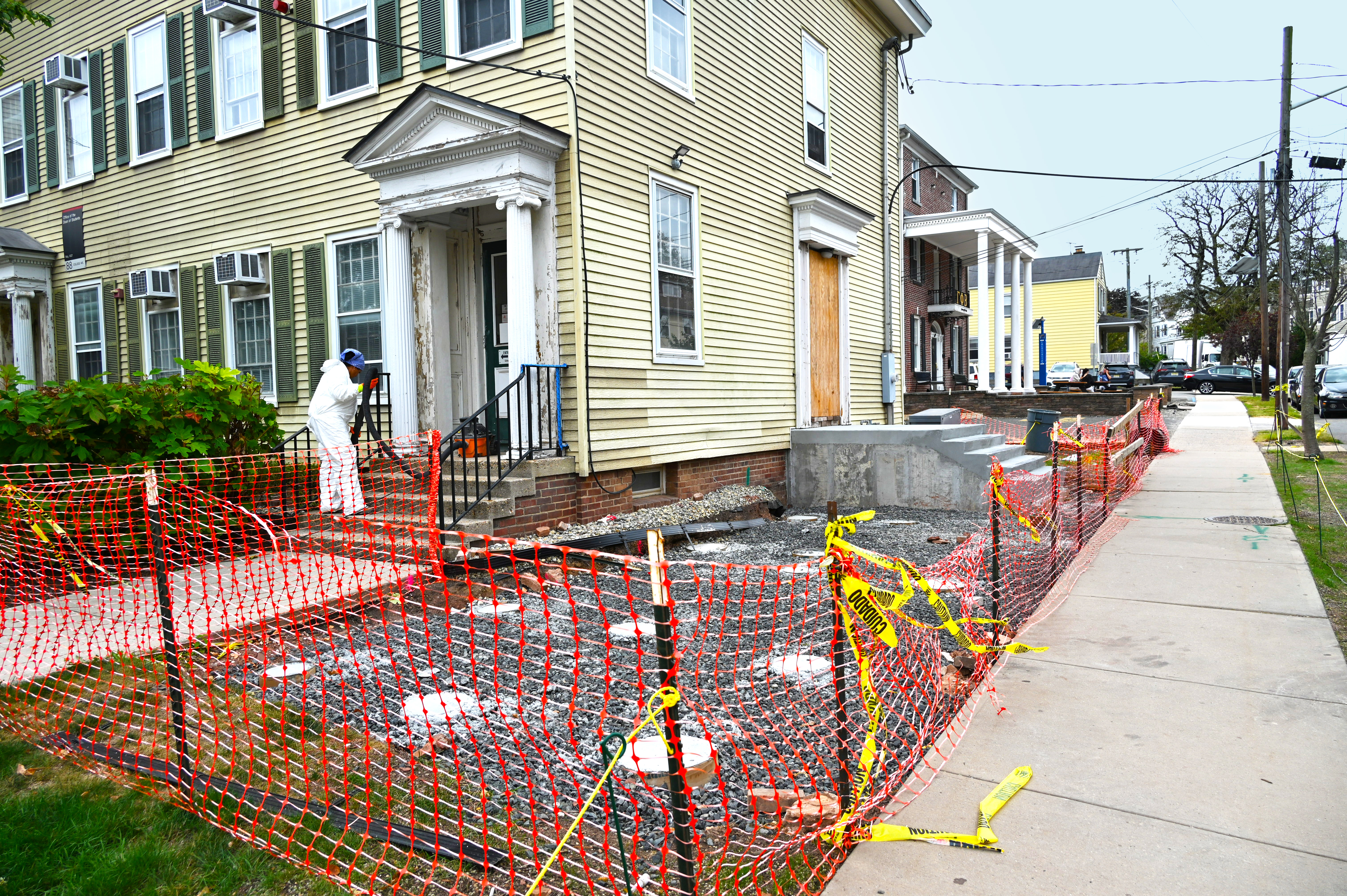
allowing students to meet onsite for improved access and services.
Keeping up with building access under the laws of the American with Disabilities Act can be challenging in a university that has so many diverse structures, including many buildings that existed long before the federal ADA laws, first signed in 1990.
“In 2014 we formed the Facilities Access Council to get a better handle on access needs,” said Bill Welsh, Associate Vice President, Access and Disability Resources. The Council meets monthly and includes a cross-section of people, many within IP&O including our Parking, Housing, Architecture and Design, and University Facilities.
The Council is informed by assessment reports completed for the New Brunswick, Newark, Camden, and University Health chancellor units that identify and prioritize required accessibility upgrades. These evaluations consider priority value, building size, high versus low use, ease of implementation, and costs. The Council also considers barriers to access that are reported to the Rutgers University Offices of Disability Services (ODS), located on each campus.
“New construction and major renovations are designed to current guidelines, but historic buildings are tougher,” said IP&O’s Susan Ryan, Project Architect and Historic Architect, Architecture and Design. These buildings were not designed with accessibility in mind. If they are registered historic properties, even minor changes may require approval by the New Jersey Historic Preservation Office (NJ HPO).
High use, student-facing facilities are generally the top priority for accessibility upgrade projects, but these pose challenges in scheduling the downtime required to complete the work.
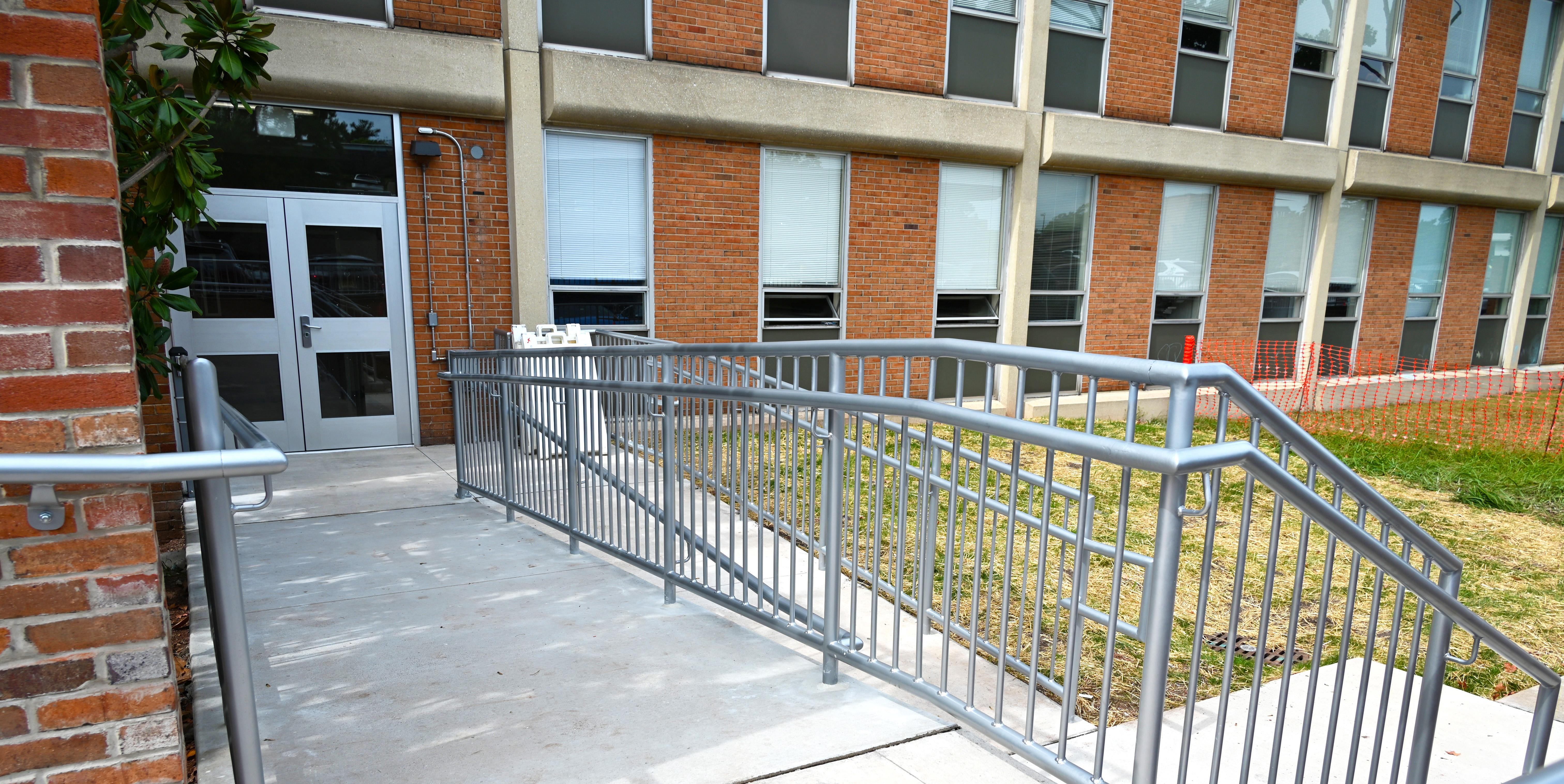
“We work with the chancellor’s offices and encourage creativity to accommodate and provide access,” said Laura Latorre, Assistant Director, UFA University Ethics and Compliance.
Upgrades that have the largest impact are considered first. Accessibility upgrade projects can range from lower-cost improvements including drinking fountains, eye wash stations, signage, parking spaces, sidewalks and door activators, to more complex and expensive improvements including entrance/egress ramps, accessible restrooms, and elevators.
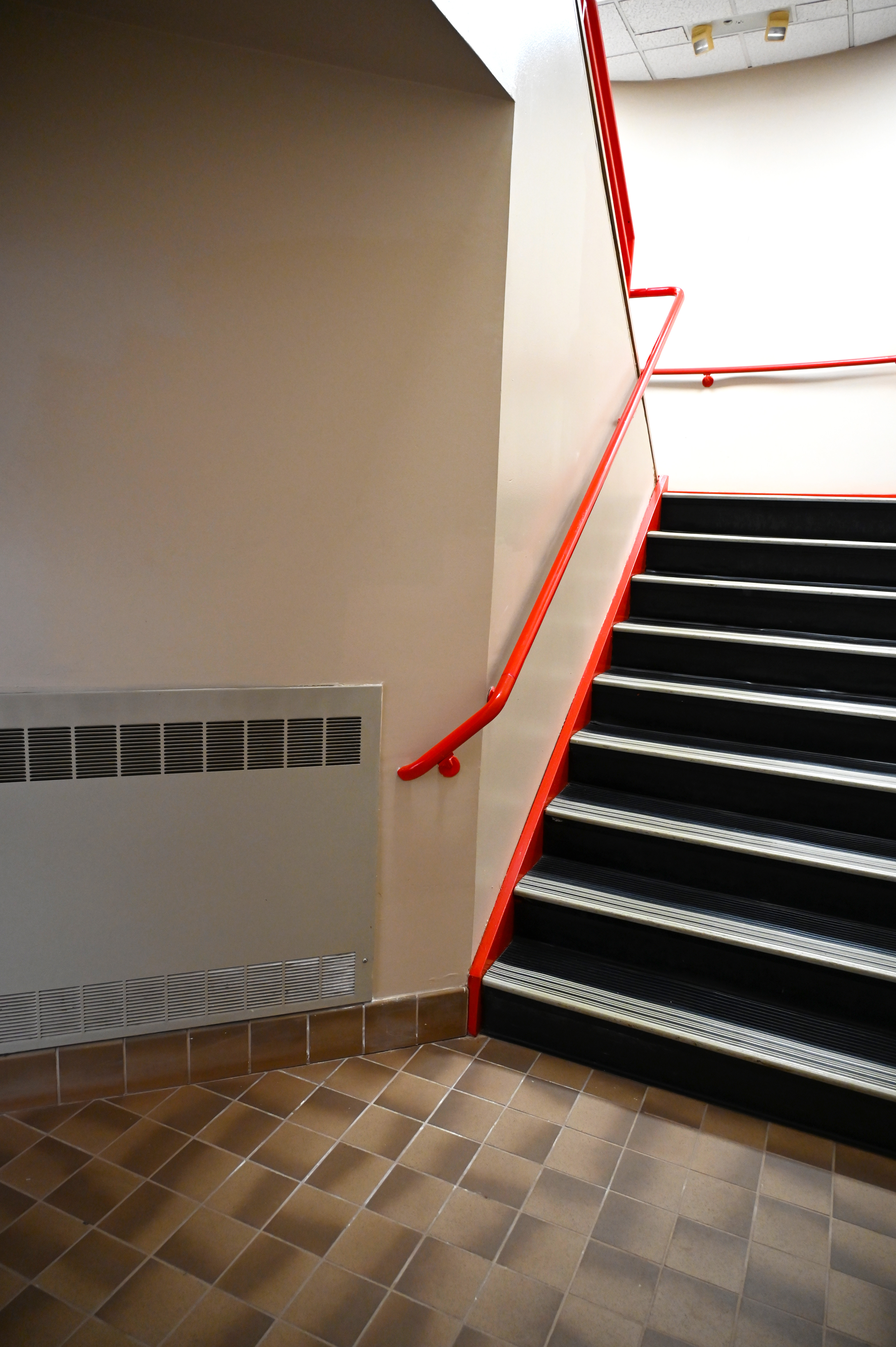
improving safety and accessibility for individuals who are blind or have low vision.
In 2021, the Board of Governors approved $10 million for all four chancellor units to complete accessibility upgrades. The Facilities Access Council determines priority and tracks the progress of projects as they unfold. While the funding has been allocated, not all projects have been completed. Remaining accessibility upgrades will be addressed in the future as additional funding becomes available.
Featured in the IP&O Newsletter, December 2025
